

The year is 1980. The month is October so of course horror is a part of the issues. In this era, it seems that horror meant demons. This is D&D pre-Ravenloft and pre-cultural expansion of the Mythos material so not surprising.
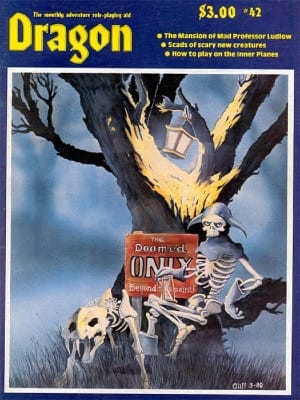
Either way, the cover by Steve Oliff is fantastic. I hate the frame look of this era of the magazine, but the painting is pretty great. I love the strange disdain that oozes out of the eyes of that weirdo skeleton. It is both creepy and funny, which is right in the horror wheelhouse.
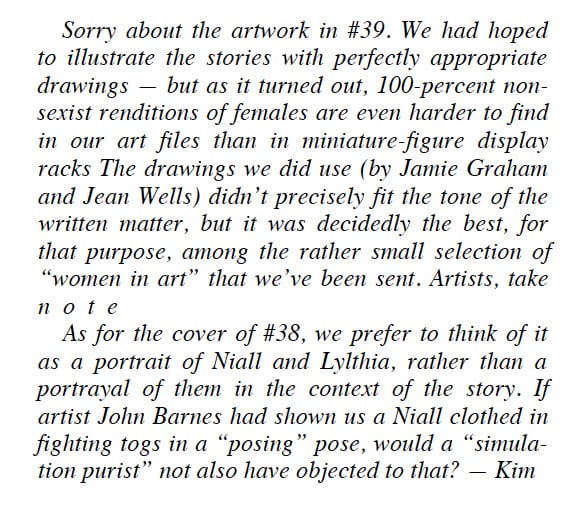
The first thing that jumped out to me at this issue was this response by Kim Mohan to a letter regarding the art in the magazine. What is interesting here is you can see that Kim wants better art, but the magazine is still so small that they are at the mercy of the submissions they get. It is an interesting tension.
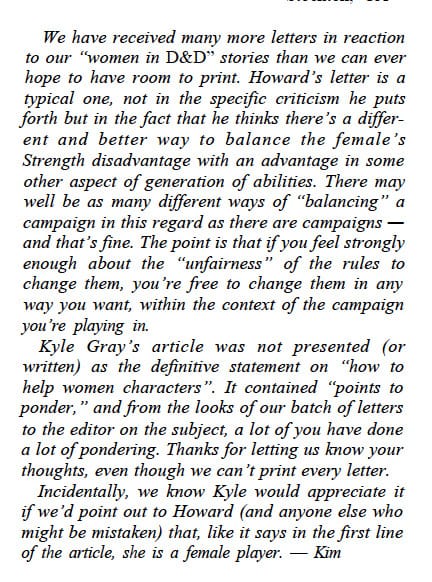
Man, the article mentioned in this response to a letter by Kim was just awful. It reflects a worldview that wasn’t only held by men at the time. Gamers can have a tendency to try and break down the world into statistical chunks, so of course it is reflected in those articles and these responses.
Also, as a side note, we see Kim call out that folks should change the rules as they like, which is contrary to most of Uncle Gary’s articles where he bangs the drum of rules are rules. I wonder if this split was reflected in the Dragon offices at the time.
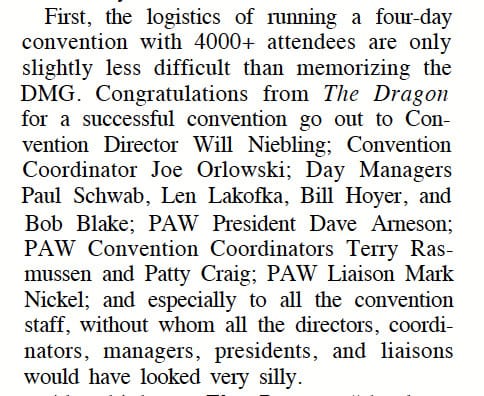
Look at those numbers. 4,000 attendees to GenCon. Last I recall, GenCon is currently in the 20 to 30k range. It is pretty cool to see how the hobby’s biggest event has grown over the decades.
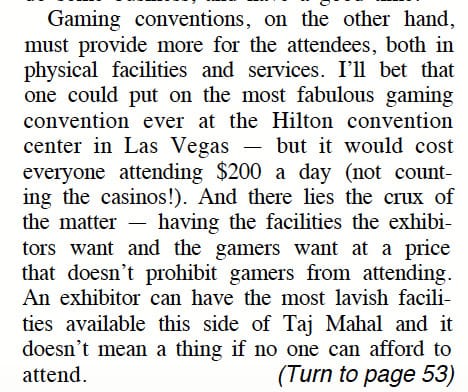
The price issues for attendance is also interesting. The struggle for venue and cost is a real one even then. Adjusted for inflation that would come out to $612.28 in today’s dollars.
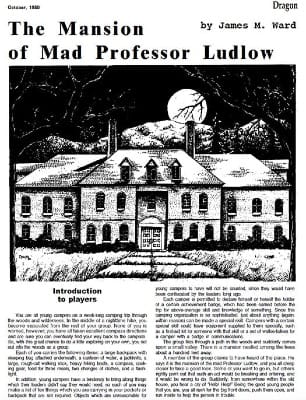
The insert for this issue is a crazy. It is called The Mansion of Mad Professor Ludlow and so not what I would expect for Dragon. The idea is that you play kids going into this insane, whimsical mansion. It “uses” the D&D rules of the time, but really it is James Ward inventing something really cool and unique using familiar terms. If anything it reminds me of kid focused Nintendo games of the late 80′s. It is really worth looking at.
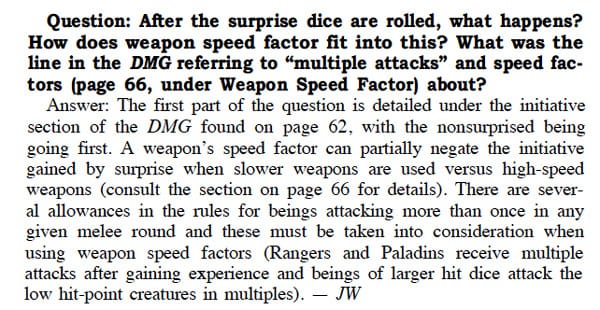
This question on Speed Factor amused me. We never used that shit ever. Too much additional crap to think about and factor in. D&D always had a little too many system adjustments, but we never ran into any trouble ignoring some of these overthought parts.
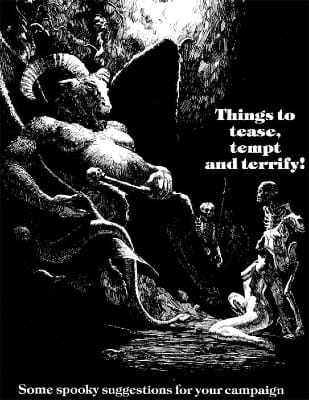
This piece is just awesome. I wish Todd Lockwood worked like this these days rather than his current work.
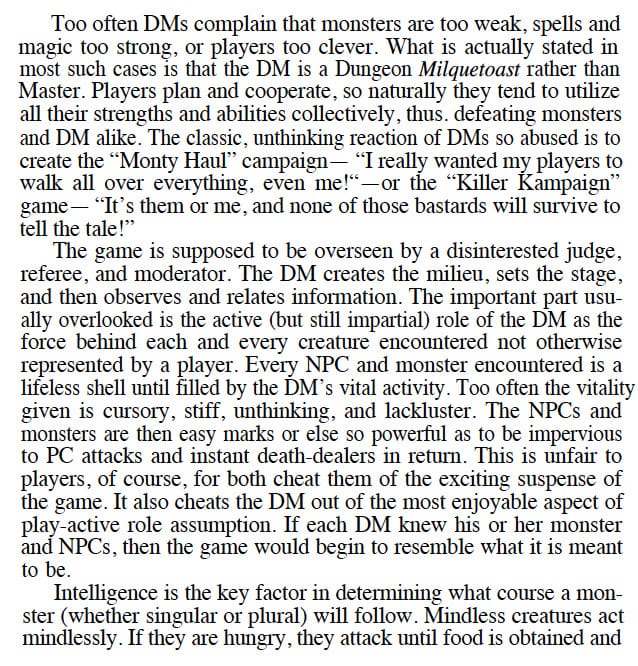
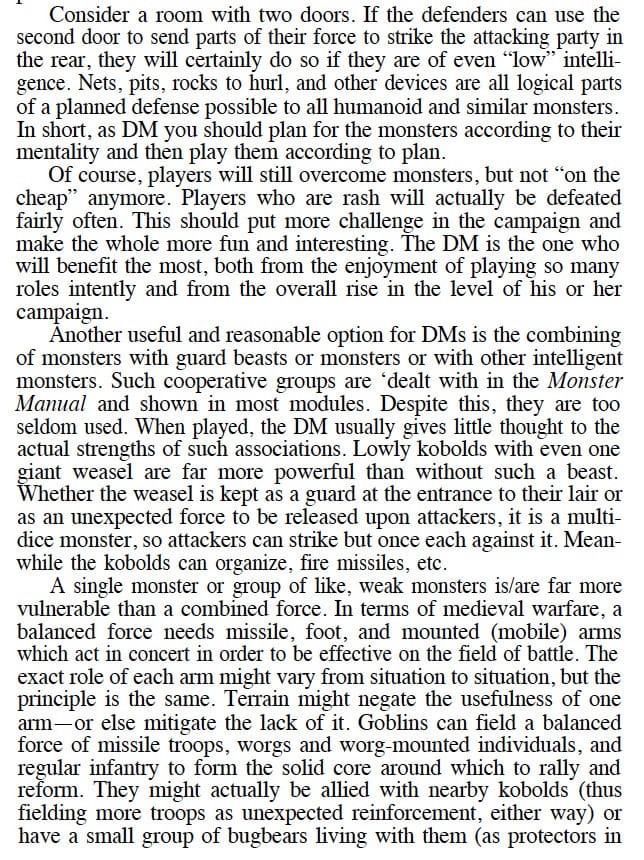
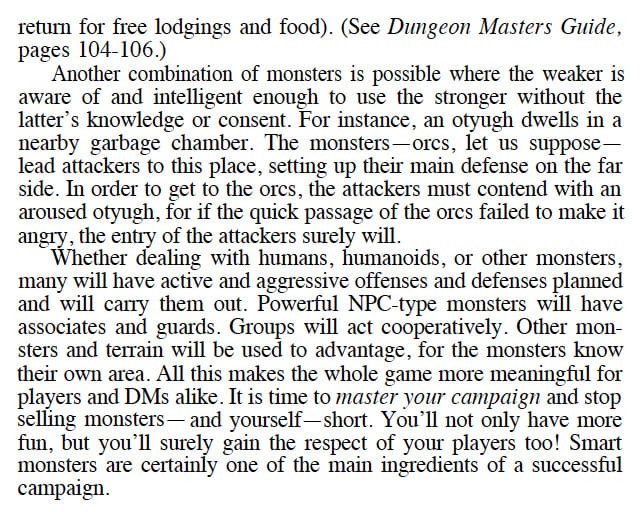
Oh Uncle Gary, I love when you appear in the magazine. It is fascinating to me to see where your brain is at any given time in the history of the game you created. In a lot of ways he is a barometer of where things are, either reflecting the common play type or reacting negatively against what he sees in gaming.
This is particularly interesting to me. It sounds like he is reacting negatively to the anecdotes of folks having fun in a way different than he sees how the game is supposed to play (reflecting his wargaming roots I think). The DM as disinterested judge is fascinating to me.
However, after he gets that initial dig in, he does provide some solid advice as to how to use the stat block to expand play to something bigger. Essentially using them as tags to inspire behavior.
Of course he still can’t help himself and gets in more digs as he goes along.


